Difference between revisions of "Aspanism"
| Line 12: | Line 12: | ||
| books = | | books = | ||
| leaders = The [[Ninth Lotus]] | | leaders = The [[Ninth Lotus]] | ||
| − | | deities = [[Aspan]], [[Suu]] | + | | deities = [[Aspan]], [[Suu]], [[Jur]] |
}} | }} | ||
| − | [[Aspanism]] is the | + | [[Aspanism]] is the heartbeat of the [[Ontustik||Caliphate of Ontustik]], centered on the foundational union of the three Great Personifications: [[Aspan]] (the Sky), [[Suu]] (the Waters), and [[Jur]] (the Ground). While [[Aspan]] is the supreme creator and the personification of the infinite blue above, the faith is far from a cold, distant monotheism. The average citizen of Ontustik lives their life in the colorful, dramatic shadow of the "Intercessors"; deities born from the primordial trio specifically to walk, love, and work alongside humanity. |
| + | |||
| + | The people and the all-female clergy, known as the [[Flowers of Aspan]], find their true connection to the divine through [[Tun]] and [[Kun]]. These divinities do not serve as the abstract concepts of creation; they are rather the celestial mirrors of the human experience. Tun, goddess of the night and love, presides over the mysteries of the heart and the intimacy of the dark. Her counterpart, [[Kun]], is the vibrant god of the sun, day, and industry, the patron of every laborer, merchant, and builder under the sun. | ||
| + | |||
| + | The creators gave life to the intercessors to permit humans access to the divine. These more relatable gods can better understand us on a human level, making the divine feel like a shared partner in the struggle and joy of existence. This relationship is physically anchored by the massive ziggurats that dominate the horizon of every [[Ontustik]] settlement. These towering structures are the social and spiritual hubs of the community. | ||
| + | |||
| + | Managing these structures and the people who worship there are the [[Flowers of Aspan]]. They lead rituals that celebrate the "higher-type" sensuality and industry that define civilization. Under the guidance of the [[Ninth Lotu]]s, the clergy teaches that the drive to build, to groom oneself, and to create beauty is a sacred reflection of the gods' own nature. In the Caliphate, to be civilized is to be godly, and to be human is to be in constant conversation with the sky and the sun. | ||
==The Tenets of Aspanism== | ==The Tenets of Aspanism== | ||
| − | + | The tenets of Aspanism function as a practical blueprint for a prosperous existence, guiding the faithful through every facet of the human experience. These instructions, meticulously curated and disseminated by the [[Flowers of Aspan]], are not merely abstract spiritual goals but actionable commandments for a flourishing society. | |
| + | |||
| + | The [[Living Papyri]], jokingly called the "Tiri Papiri" by clergy insiders, cover the breadth of civil life. They prescribe methods for cultivating the arid lands of Ontustik, governing the ethics of commerce and lending, and outlining the social obligations of friendship and family. Much of this wisdom is anchored in the [[Sezim Taldik]], derived from the many parables within the [[Legend of Batir]]. Through the hero-king's triumphs and frequent, messy failures, the Aspanist clergy illustrates that a "better life" is built on the pursuit of beauty, the maintenance of order, and the mastery of the physical world under the living and loving sky. | ||
| + | |||
| + | ==Aspanist Clergy== | ||
| + | The clergy of [[Aspanism]], known collectively as the [[Flowers of Aspan]], represent a seamless union of spiritual authority and civic governance. In the [[Ontustik|Caliphate of Ontustik]], there is no distinction between church and state; the Flowers are both the keepers of the divine blueprint and the administrators of the law. This sacred hierarchy is anchored in the capital city of [[Anar]], where the [[Ninth Lotus|Ninth Lotus of Aspan]] reigns as the nation’s supreme divine leader. | ||
| − | + | From her seat of power, the Ninth Lotus of Aspan commands the faith and the country, ensuring that the civilization-building principles of Aspanism are upheld across every province. Throughout the settlements of Ontustik, she appoints specific floral designations, creating a lineage of living icons. Each settlement is thus governed by a single high-ranking priestess whose title is tied to her location and her place in an unbroken succession. | |
| − | + | The Fourteenth Rose of Karakat, for example, serves as the absolute authority in her region; upon her passing, her successor is consecrated as the Fifteenth Rose. These women are far more than mere bureaucrats; they are the physical intercessors for their people, embodying the beauty, industry, and order that Aspanism demands of all humans. Under their guidance, the massive ziggurats of the Caliphate function as the literal and metaphorical centers of the world, where the Flowers cultivate both the land and the souls of the faithful. | |
| − | |||
===[[Sezim Taldik|The Sezim Taldik]]=== | ===[[Sezim Taldik|The Sezim Taldik]]=== | ||
Revision as of 03:10, 7 February 2026

| Type | Polytheistic |
|---|---|
| Races | Human |
| Organized | Yes |
| Founded | 1 IM |
| Leaders | The Ninth Lotus |
| Deities | Aspan, Suu, Jur |
Aspanism is the heartbeat of the |Caliphate of Ontustik, centered on the foundational union of the three Great Personifications: Aspan (the Sky), Suu (the Waters), and Jur (the Ground). While Aspan is the supreme creator and the personification of the infinite blue above, the faith is far from a cold, distant monotheism. The average citizen of Ontustik lives their life in the colorful, dramatic shadow of the "Intercessors"; deities born from the primordial trio specifically to walk, love, and work alongside humanity.
The people and the all-female clergy, known as the Flowers of Aspan, find their true connection to the divine through Tun and Kun. These divinities do not serve as the abstract concepts of creation; they are rather the celestial mirrors of the human experience. Tun, goddess of the night and love, presides over the mysteries of the heart and the intimacy of the dark. Her counterpart, Kun, is the vibrant god of the sun, day, and industry, the patron of every laborer, merchant, and builder under the sun.
The creators gave life to the intercessors to permit humans access to the divine. These more relatable gods can better understand us on a human level, making the divine feel like a shared partner in the struggle and joy of existence. This relationship is physically anchored by the massive ziggurats that dominate the horizon of every Ontustik settlement. These towering structures are the social and spiritual hubs of the community.
Managing these structures and the people who worship there are the Flowers of Aspan. They lead rituals that celebrate the "higher-type" sensuality and industry that define civilization. Under the guidance of the Ninth Lotus, the clergy teaches that the drive to build, to groom oneself, and to create beauty is a sacred reflection of the gods' own nature. In the Caliphate, to be civilized is to be godly, and to be human is to be in constant conversation with the sky and the sun.
The Tenets of Aspanism
The tenets of Aspanism function as a practical blueprint for a prosperous existence, guiding the faithful through every facet of the human experience. These instructions, meticulously curated and disseminated by the Flowers of Aspan, are not merely abstract spiritual goals but actionable commandments for a flourishing society.
The Living Papyri, jokingly called the "Tiri Papiri" by clergy insiders, cover the breadth of civil life. They prescribe methods for cultivating the arid lands of Ontustik, governing the ethics of commerce and lending, and outlining the social obligations of friendship and family. Much of this wisdom is anchored in the Sezim Taldik, derived from the many parables within the Legend of Batir. Through the hero-king's triumphs and frequent, messy failures, the Aspanist clergy illustrates that a "better life" is built on the pursuit of beauty, the maintenance of order, and the mastery of the physical world under the living and loving sky.
Aspanist Clergy
The clergy of Aspanism, known collectively as the Flowers of Aspan, represent a seamless union of spiritual authority and civic governance. In the Caliphate of Ontustik, there is no distinction between church and state; the Flowers are both the keepers of the divine blueprint and the administrators of the law. This sacred hierarchy is anchored in the capital city of Anar, where the Ninth Lotus of Aspan reigns as the nation’s supreme divine leader.
From her seat of power, the Ninth Lotus of Aspan commands the faith and the country, ensuring that the civilization-building principles of Aspanism are upheld across every province. Throughout the settlements of Ontustik, she appoints specific floral designations, creating a lineage of living icons. Each settlement is thus governed by a single high-ranking priestess whose title is tied to her location and her place in an unbroken succession.
The Fourteenth Rose of Karakat, for example, serves as the absolute authority in her region; upon her passing, her successor is consecrated as the Fifteenth Rose. These women are far more than mere bureaucrats; they are the physical intercessors for their people, embodying the beauty, industry, and order that Aspanism demands of all humans. Under their guidance, the massive ziggurats of the Caliphate function as the literal and metaphorical centers of the world, where the Flowers cultivate both the land and the souls of the faithful.
The Sezim Taldik
In the modern temple there is no book so revered as the Sezim Taldik, which contains a thousand stories, including the celebrated Legend of Batir.
The Memes of Aspan
A collection of 64 memes said to be the blueprints of the universe.
The Will to Power
All is possible under the sky.
The Aspanist Pantheon
There is only one recognized god, which is Aspan.
The Creator
The role of the creator is filled solely by:
The Intercessors
There is no intercession. What happens under the sky, happens.
The Messengers
Birds, weather, thunder and lighting add up to portents and omens.
The Destroyer
- Bostiq: Goddess of the void.
The Aspanist Clergy
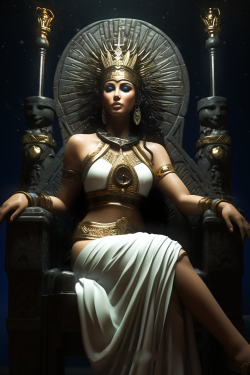
Women... lots of women.
The Flowers of Aspan
Skilled women.
The Temple of Aspan
The Temple of Aspan is A temple can be found in every settlement in Ontustik.
Religious Observances
Popular Folklore
| Copyright © 2021-2026 by Robyn Blaber and Will to Power Games. All rights reserved. Content on this website may not be reproduced without written permission of the copyright owner. |

